

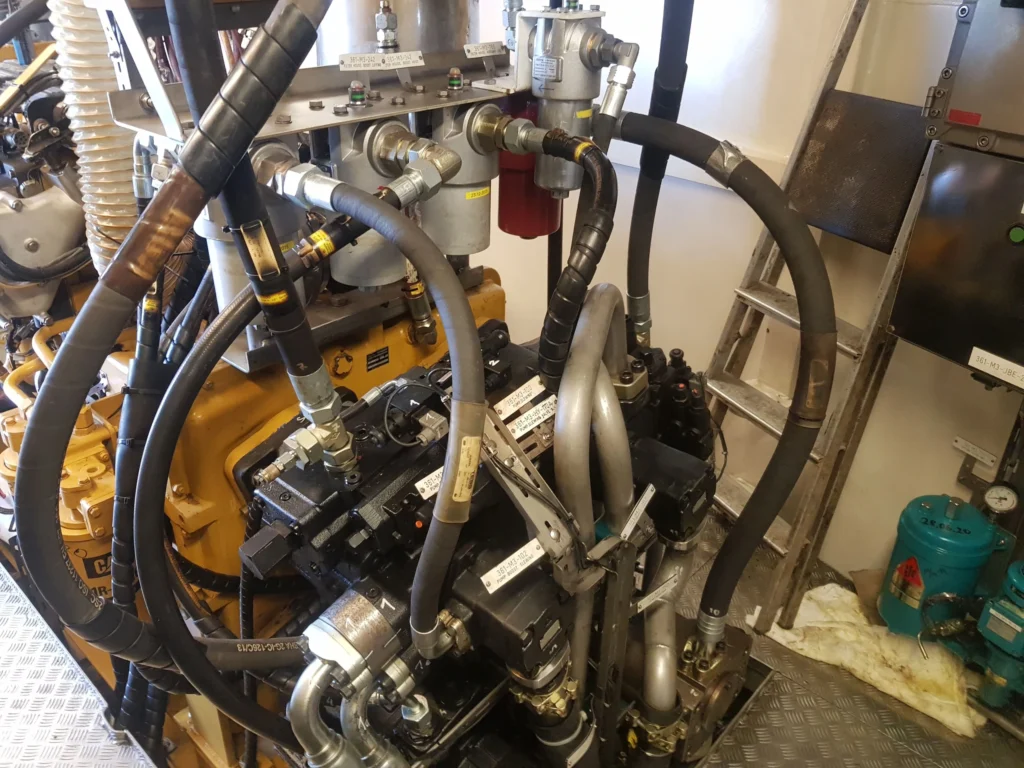
Hydraulic systems play a key role in the operation of vessels, ensuring the reliable operation of mechanisms such as steering gear, deck cranes, winches, hatch cover systems, as well as windlasses and mooring winches. We offer a full range of services related to the diagnostics, repair, maintenance and modernisation of hydraulic systems, including but not limited to repair of pumps and cylinders, replacement of hydraulics hoses and precise leak removal.
Hydraulic systems
We specialise in:
- Troubleshooting – we accurately identify the source of problems and quickly eliminate faults.
- Repairs and overhauls of hydraulic components, including pumps, motors, hydraulic cylinders and control systems.
- Modernisation and design of hydraulic systems including installation of new systems based on hydraulic diagrams and design and modernisation of existing hydraulic systems.
- Inspection and maintenance of hydraulic systems, which includes replacement of oil, seals, directional valves, cleaning of components and checking the condition of valves and hoses.
- Filling hydraulic accumulators and taking measurements of hydraulic oil pressure, flow and temperature, which allows us to monitor and maintain systems in excellent condition on an ongoing basis.
- Verifying compliance with safety standards and certification ensures that systems comply with legal requirements and industry standards.
The most common problems we solve:
- contamination and leaks of hydraulic oil
- damage to pumps, motors and hydraulic valves
- problems with hydraulic accumulators and hoses (mechanical damage, corrosion, wear)
- wear on moving parts, such as pistons, cylinders, or shafts
- wearing out of seals leading to more serious failures
Our offer also includes the labeling of hydraulic lines, which facilitates their identification and allows rapid intervention in the event of failure. We service both hydraulic systems and pneumatic equipment on ships, which makes us a comprehensive service partner.
Thanks to our workshop in Gdynia, equipped with a professional tool room and our mobile solutions, we can respond quickly to our customer’s needs, carrying out work both in port and directly on board. We offer access to a wide range of new and repaired parts to optimise cost and shorten time of hydraulic system repairs.
We aim to ensure that the hydraulic systems on your vessel work reliably, whether as part of planned maintenance or in the event of a sudden breakdown. Contact us to find out more or to schedule a hydraulic system repair or service.


Why should You cooperate with us?

1
years of experience

1
countries we operate
1
projects realised

1
clients around the world

In house Tool shop
A Complete Workshop and Service Base
We have fully equipped, in-house workshop and storage halls, as well as dedicated test stations for repaired equipment. Additionally, our portable technical facilities enable us to provide servicing and repairs in ports and shipyards worldwide. We possess a range of diagnostic and measurement devices that allow us to conduct on-site diagnostics directly at the client’s location.
Our capabilities include:
- Mobile diagnostic workshop for hydraulic systems
- Mobile units and equipment for measuring oil contamination, flushing installations, and filtering oil using filtration units
- Load testing of cranes using Water Bags
FAQ – frequently asked questions
1. What is the importance of hydraulic systems in the operation of marine vessels?
Hydraulic systems are one of the key components of a vessel’s technical infrastructure. They are responsible for the proper functioning of onboard mechanisms such as steering gear, cranes, anchor windlasses, and mooring systems. Their reliability directly affects both safety and operational continuity.
2. What does the scope of hydraulic system servicing include?
Servicing covers diagnostic, repair, and preventive activities. In practice, this includes fault identification, component overhauls, replacement of consumable parts, leak elimination, and modernization works to align the system with current technical requirements.
3. Which hydraulic system components most frequently require servicing?
The most commonly serviced components include pumps, hydraulic motors, cylinders, and control valves. Typical issues also involve damage to hoses and wear of seals, resulting from long-term operation in demanding environmental conditions.
4. What does hydraulic system diagnostics involve?
The diagnostic process is based on analyzing operating parameters such as pressure, flow rate, and fluid temperature. This is complemented by technical inspections and condition assessments of components, allowing precise identification of irregularities.
5. Can existing hydraulic systems be modernized?
Yes, modernization is an important aspect of maintaining systems over their lifecycle. It may involve replacing selected components or redesigning entire systems to improve performance, reliability, and compliance with current standards.
6. How often should hydraulic systems be inspected?
Inspection frequency depends on operating conditions and manufacturer recommendations. In practice, regular inspections and preventive maintenance are essential to minimizing the risk of failures and costly downtime.
7. What factors most commonly lead to hydraulic system failures?
Common causes include contamination of hydraulic oil, seal degradation, system leaks, and natural wear of components operating under load. The way the system is used also plays a significant role.
8. Can servicing be carried out directly on the vessel?
Yes, many activities can be performed on-site—directly on the vessel, in a port, or at a shipyard. This approach helps reduce downtime and improves service efficiency.
9. What does standard hydraulic system maintenance include?
Standard maintenance includes oil and filter replacement, leak checks, verification of valves and hoses, and cleaning of system components. These actions help maintain stable operating parameters.
10. Why is it worth entrusting hydraulic system servicing to a specialized contractor?
Specialized providers offer access to appropriate diagnostic tools, technical facilities, and experience in working with marine installations. This ensures accurate diagnostics, high-quality execution, and reduced risk of recurring failures.