

Hatch covers are a key component of vessels, guaranteeing the watertightness and safety of the cargo they carry. The requirements of class inspections and intensive operation mean that their technical condition must be regularly checked and defects quickly rectified. For 25 years, our company has been providing comprehensive solutions for the service, repair, and maintenance of hatch cover systems and associated hydraulic and mechanical systems.
Hatch cover systems
We provide full support for
- Repairing leaks in hydraulic systems, including diagnosing leaks, replacing seals and reconditioning damaged components.
- Servicing of hydraulic systems, including repair or replacement of hydraulic pumps, control valves, replacement of hoses and overhaul of motors.
- Overhaul of hydraulic cylinders, involving disassembly, verification, cleaning, replacement of seals and pressure testing to check for leaks after repair.
- Replacement of pipelines.
- Flushing of hydraulic systems to achieve the required piping cleanliness class.
- Maintenance and repairs to hatch covers, including repairs to wheels, hatch rails, bearing washers, stops and steelwork on hatch covers of all types.
- Repair and replacement of steel components of hatch covers, including removal of corrosion damage, and reconditioning of hinges, guides and pins.
Planned and emergency works
We carry out both planned and emergency work, ensuring minimal downtime and full efficiency of hatch cover systems. With experience of working on vessels around the world, we can meet any challenge, regardless of the location or complexity of the project. Repairs can be carried out directly on board, in port, or in our workshop with a professional tool room in Gdynia, providing access to specialized equipment, certified tools, spare parts and overhauled repaired equipment for replacement. Our services also include troubleshooting, i.e. detailed diagnosis of hatch cover problems and their effective removal. We guarantee that repairs and servicing are carried out to the highest quality standards and in accordance with current standards.
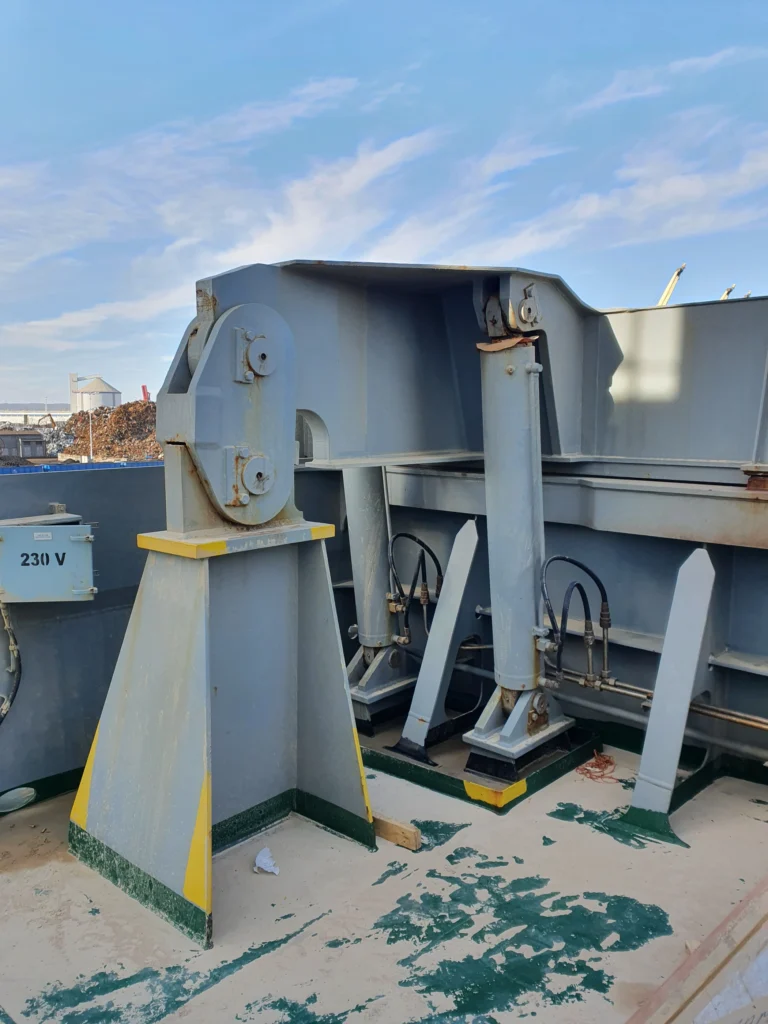
Ensure the efficiency and safety of your hatch covers – contact us to discuss your needs.


Why should You cooperate with us?

1
years of experience

1
countries we operate

1
projects realised

1
clients around the world

In house Tool shop
A Complete Workshop and Service Base
We have fully equipped, in-house workshop and storage halls, as well as dedicated test stations for repaired equipment. Additionally, our portable technical facilities enable us to provide servicing and repairs in ports and shipyards worldwide. We possess a range of diagnostic and measurement devices that allow us to conduct on-site diagnostics directly at the client’s location.
Our capabilities include:
- Mobile diagnostic workshop for hydraulic systems
- Mobile units and equipment for measuring oil contamination, flushing installations, and filtering oil using filtration units
- Load testing of cranes using Water Bags
FAQ – frequently asked questions
1. What function do hatch cover systems perform on marine vessels?
Hatch cover systems are responsible for ensuring the watertight integrity of cargo holds and protecting transported cargo from weather conditions. Their technical condition has a direct impact on the operational safety of the vessel and compliance with classification society inspection requirements.
2. Should hatch cover servicing be carried out on a regular basis?
In practice, regular inspections are a standard requirement resulting from both the intensity of operation and applicable technical procedures. Systematic maintenance helps reduce the risk of unplanned downtime and costly emergency repairs.
3. Which areas most frequently require servicing?
These typically include hydraulic systems (including leaks and seal wear), moving components such as rollers and guides, as well as steel structures exposed to corrosion and operational damage.
4. Where are service and repair works carried out?
The scope of work determines the location of execution. Some activities are performed directly on board – in port or at a shipyard – while more advanced component overhauls are carried out in workshop facilities.
5. What does the diagnostic process of hatch cover systems involve?
Diagnostics include analysis of the entire system’s operation, identification of leakage sources, assessment of component wear, and verification of operating parameters. Based on this, the scope of necessary repair work is defined.
6. What does the overhaul of hydraulic cylinders involve?
The process includes disassembly, technical condition assessment, cleaning of components, seal replacement, and pressure testing. The objective is to restore full functionality and confirm tightness after completion of the work.
7. Is it possible to refurbish components instead of replacing them?
In many cases, yes—provided the technical condition of the component allows it. Refurbishment is a cost-effective solution; however, each decision is preceded by an assessment of wear level and the risks associated with further operation.
8. When is hydraulic system flushing required?
Flushing is carried out to achieve the required cleanliness class of the installation, particularly after failures or major overhaul works. This helps minimize the risk of secondary system damage.
9. Are emergency services also provided?
Yes, emergency interventions are an important part of service operations. Their goal is to restore system functionality as quickly as possible while maintaining required technical standards.
10. What factors should be considered when selecting a service provider?
Key factors include experience with various vessel types, access to technical facilities, and the ability to carry out work in different locations. The quality of diagnostics and compliance with applicable industry standards are also crucial.