

With years of experience working with demanding hydraulic, electrical and mechanical systems on vessels, we can meet even the most complex challenges in the land-based sector.
Maintenance, repair and overhaul of land-based industry equipment
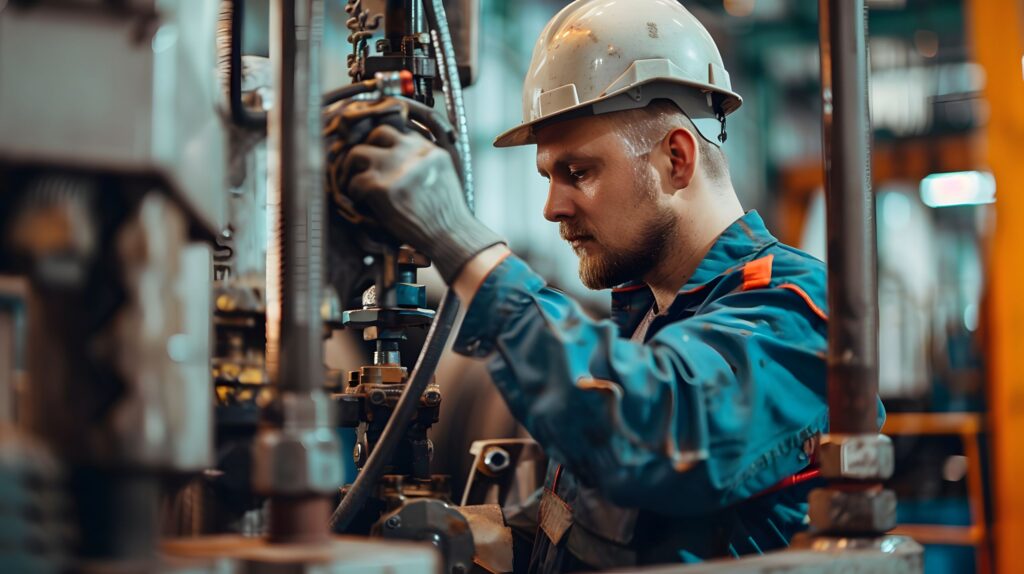
We offer comprehensive services for the servicing, repair, maintenance and modernisation of equipment with hydraulic systems and electric drives for various industrial sectors. We deal with routine periodic inspections to prevent breakdowns and repairs in the event of sudden malfunctions of industrial machinery – regeneration or replacement of damaged components such as hydraulic pumps, cylinders, valves or hoses. We serve companies in the construction, agricultural, transport and industrial sectors, among others. Our experience ranges from servicing and overhauling excavators and mobile cranes to repairing machinery used in the food industry, such as slicing machines, to regenerating granulation components in feed production lines or overhauling balers in waste management companies.
Ensure the reliability of your machinery – take advantage of our experience, knowledge and tooling facilities for a reliable industrial equipment service.
Why should You cooperate with us?

1
years of experience

1
countries we operate

1
projects realised

1
clients around the world

In house Tool shop
A Complete Workshop and Service Base
We have fully equipped, in-house workshop and storage halls, as well as dedicated test stations for repaired equipment. Additionally, our portable technical facilities enable us to provide servicing and repairs in ports and shipyards worldwide. We possess a range of diagnostic and measurement devices that allow us to conduct on-site diagnostics directly at the client’s location.
Our capabilities include:
- Mobile diagnostic workshop for hydraulic systems
- Mobile units and equipment for measuring oil contamination, flushing installations, and filtering oil using filtration units
- Load testing of cranes using Water Bags
FAQ – most frequently asked questions
1. What types of machinery do you service?
We service both individual pieces of equipment and complete machines used across a wide range of industries. This includes construction machinery, production equipment, agricultural machinery, as well as systems equipped with hydraulic and electric drive systems. Every enquiry is assessed individually, so our services are not limited to a specific type of equipment.
2. What does industrial equipment servicing involve?
Servicing does not always mean repairing a breakdown. In many cases, it begins with an inspection of the machine’s technical condition and an assessment of the wear of its individual components. Based on the results, we determine whether routine maintenance, replacement of consumable parts, component regeneration or a more extensive overhaul is required.
3. Is it worth carrying out inspections if the machine is operating properly?
Absolutely. Many faults develop gradually and may not show obvious symptoms for a long time. Regular inspections help identify worn components at an early stage, reducing the risk of costly failures and unexpected production downtime.
4. Can repairs be carried out at the customer’s site?
Yes, whenever the nature of the fault allows it. Performing repairs on-site helps minimise downtime and enables the machine to return to operation more quickly. More complex repairs or component regeneration are carried out in our fully equipped workshop.
5. Which components most commonly require repair?
The components that experience the greatest wear are usually hydraulic pumps, cylinders, valves, hydraulic hoses, electric drives and heavily loaded mechanical parts. In many cases, these components can be successfully regenerated instead of being replaced.
6. Can older machines be modernised?
Yes. Modernisation is often an effective way to improve machine reliability and enhance its performance. Sometimes replacing selected components is enough to extend the machine’s service life and improve its operating efficiency for years to come.
7. How is a machine fault diagnosed?
The process begins with analysing the symptoms reported by the operator. This is followed by measurements and testing of the hydraulic, electrical and mechanical systems. This approach makes it possible to identify the actual cause of the problem instead of replacing parts by trial and error.
8. What happens after the repair has been completed?
Once all repair work has been finished, the machine is thoroughly checked before being returned to the customer. All systems are tested to confirm that they are operating correctly and that the original fault has been completely eliminated. Depending on the type of equipment, additional functional or operational tests may also be carried out.
9. Is regular servicing really worth it?
In most cases, yes. Scheduled maintenance is usually far less expensive than dealing with major breakdowns that can stop production for hours or even days. Regular servicing also improves equipment reliability and makes it easier to identify components that require replacement before they fail.
10. Can the scope of services be tailored to a company’s needs?
Yes. Every business uses different equipment and operates under different conditions, so each service plan is prepared individually. It may include a one-off repair, scheduled inspections, or ongoing maintenance of selected machines.