

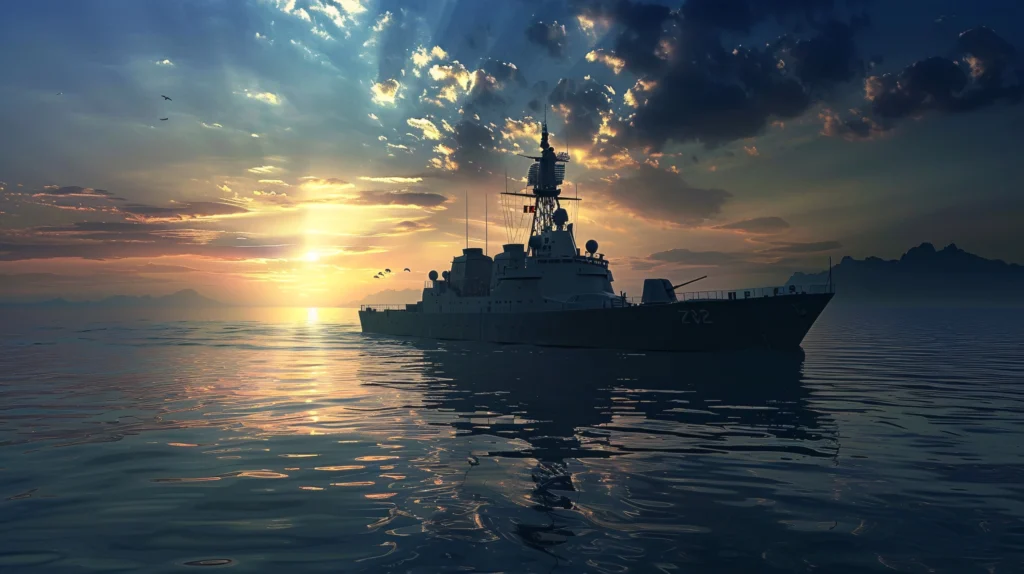
We have been providing maintenance, repair and diagnostic services to the Navy for more than 20 years. Our offer includes comprehensive technical support for various classes of naval vessels including submarine – and other hydraulic systems used by the naval forces.
Cooperation with the Navy
Our activities include work related to fault diagnosis, condition assessment, maintenance and comprehensive mechanical, hydraulic and electrical repairs. We successfully carry out assignments including repairs to engines, valves, hydraulic pumps and crane systems.
Thanks to our many years of experience and the necessary military concessions and certificates, we guarantee the highest quality of our services. The trust placed in us by the armed forces at sea, is due to our reliability, precision and advanced technological facilities. Thanks to state-of-the-art tools, such as the SKF shaft alignment tool, diagnostic and measurement apparatus for hydraulic systems and hydraulic spanners and bolt tensioners, among others, we can meet even the most demanding repairs of armed forces vessels.
Our presence in the defence sector is no accident – it is the result of experience, expertise and a full understanding of the challenges faced by naval vessels. Cooperation with the Navy is not only about getting the job done but above all about contributing to the safety of the armed forces operating at sea.
Why should You cooperate with us?

1
years of experience

1
countries we operate

1
projects realised

1
clients around the world

In house Tool shop
A Complete Workshop and Service Base
We have fully equipped, in-house workshop and storage halls, as well as dedicated test stations for repaired equipment. Additionally, our portable technical facilities enable us to provide servicing and repairs in ports and shipyards worldwide. We possess a range of diagnostic and measurement devices that allow us to conduct on-site diagnostics directly at the client’s location.
Our capabilities include:
- Mobile diagnostic workshop for hydraulic systems
- Mobile units and equipment for measuring oil contamination, flushing installations, and filtering oil using filtration units
- Load testing of cranes using Water Bags
FAQ – most frequently asked questions
1. Does every naval vessel require the same scope of work?
No. Even two vessels of the same class may require completely different types of maintenance or repairs. The scope of work depends on their technical condition, how they have been operated, and the reason they have been sent for servicing.
2. What happens before the actual repair work begins?
The first step is to determine the source of the problem. Only after inspecting the equipment and assessing its performance is it possible to identify which components require repair and which are still suitable for continued use.
3. Is completing the work quickly the only priority when servicing naval vessels?
No. While meeting deadlines is important, the quality and accuracy of the work are equally critical. Every task must also be carried out in accordance with the applicable technical procedures.
4. Which systems are most commonly inspected?
There is no fixed list. Depending on the vessel, inspections may involve propulsion systems, hydraulic installations, onboard equipment, and other systems that support the vessel’s day-to-day operation.
5. Can all repairs be planned in advance?
Not always. Some issues become apparent only during inspections or after selected components have been dismantled. In such cases, the original scope of work may need to be extended.
6. Why is specialised equipment used during diagnostics?
Some faults cannot be identified through a visual inspection alone. Diagnostic and measuring equipment makes it possible to assess the condition of individual systems more accurately and avoid replacing components that are still fully operational.
7. Can a single service project include work on several different systems?
Yes. If required by the vessel’s technical condition, a single project may include mechanical, hydraulic, and electrical work. Combining different tasks during one service period often improves efficiency and reduces downtime.
8. Is the equipment tested again after the repairs have been completed?
Yes. Final inspections and testing are carried out to confirm that all repaired systems operate correctly and are ready to return to service.
9. Does experience gained on commercial vessels matter when working with the Navy?
Yes, although every project has its own specific requirements. Extensive experience in servicing marine equipment helps technicians diagnose faults efficiently and organise more demanding repair work.
10. Why is regular maintenance so important for naval vessels?
Routine servicing helps detect early signs of wear before they develop into more serious problems. In many cases, addressing a minor issue at the right time can prevent more extensive repairs and reduce the risk of unexpected failures.